
Dig around in a retro gaming technician’s toolbox long enough, and there’s a very good chance you come across a white plastic box with a weird green ZIF socket and a handful of adapters that look like they were thrown together just as hacker movie extras in the late eighties or early nineties.
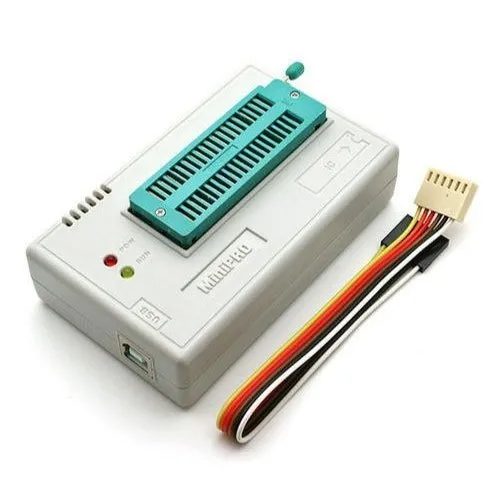
If you spend any amount of time around retro hardware and open-source projects, there’s a good chance you’ll eventually run into the 27C160 – one of those EPROMs that refuses to die quietly, showing up everywhere from arcade boards to consoles and microcomputers.
Just go to Google and search for:
"github" + "27C160" + "XXXXX"…where XXXXX is your favorite vintage console or microcomputer, and you will literally find tons of niche projects that make you go, “huh, wait… what??? Why didn’t I know about this project?”
Welcome to the world of the TL866A programmer!
The little USB universal programmer hit the repair scene around 2010-ish and quickly became the average repair guy’s favorite secret tool. It ruled supreme over any of its peers until it was officially discontinued in early 2018.
Heck, it even caused some scene drama, with the manufacturer aggressively posting counterfeit warnings – which is highly ironic, since the TL866A itself was often used to produce counterfeit products.
Despite the drama, or perhaps because of it, the TL866A truly carved out somewhat of a cult following since it was simply perfect: absurdly versatile, capable and cheap: It supported well over 13,000 devices including EPROMs, EEPROMs, Flash chips, microcontrollers, logic testers, and more.
The TL866A was notorious in the repair community, and so much so that even today you’ll have a hard time finding a second-hand original or clone; if you own one, why on earth would you sell it?
So why am I writing a post if it has been out of production for almost eight years?
Firstly, because I know it still patiently waits in plenty of repair toolboxes, and occasionally pops up second-hand for ridiculously cheap. If nothing else, it might put your eyes on a dedicated TL866A hunt next time you’re scouring for bargains.
There are also a lot of newcomers (meanwhile even already experienced pros) who have joined the repair scene in the last eight years – that might want to pick one up.
And last but not least, strap yourself in – because if you thought your trusty old TL866 could only program up to 40-pin chips… think again! I recently went down a little niche rabbit hole and came across a TL866 adapter that was not one of the cheapy adapters sold back in the day on AliExpress.
So, if the 27C160 means anything to you (and it should, if you’re into retro gaming), enjoy this write-up: a fair bit of testing, some conclusions, and a rabbit-hole journey into finding a tiny, community-driven adapter that finally lets your TL866 handle the likes of the 42 pins of a 27C160! -enjoy!
Welcome to the 27C322/160/800/400 EPROM Programming Adapter Series
So why am I talking about an adapter all of a sudden?
Well, the TL866A is ridiculously capable, but even a Swiss Army knife has limits. Step into the world of EPROMs like the pretty popular 27C160, and suddenly you’re juggling headaches and assumptions that even the TL866A wasn’t originally designed to support.
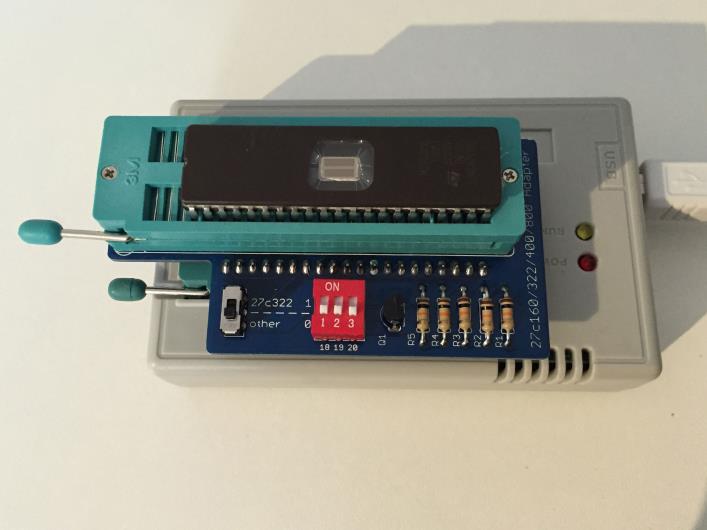
But the retro scene, being creative and largely schooled on shows like MacGyver and The A-Team, will find a way – building a tank with duct tape and WD40 that somehow comes to the rescue, even when some chips won’t play nice.
Enter the 27C160-TL866 adapter, an open-source project by Eladio Martinez (aka Mafe72) of mini-mods.com. This solution does not rely on firmware hacks or messing with the guts of your TL866A. It is a standalone adapter that keeps your TL866A intact and lets it talk to the EPROM as if it was always meant to. Simple, elegant, and perfectly nerdy – like a little tower-of-power on top of your TL866A.
Is it perfect?
Well, no – or better said not exactly. But that is at no fault of the adapter! Some variants of the 27C160 that STElectronics has produced over the years are simply less forgiving or tolerant, but more on that later.
Will this adapter brighten up your day?
Oh hell yes! My interest was sparked by projects like c264-magic-cart, which is an amazing project by Marko Šolajić for Commodore C16/C116/Plus4 machines that also works with smaller chips, but is a such a perfect candidate to run 27C160 EPROMs.
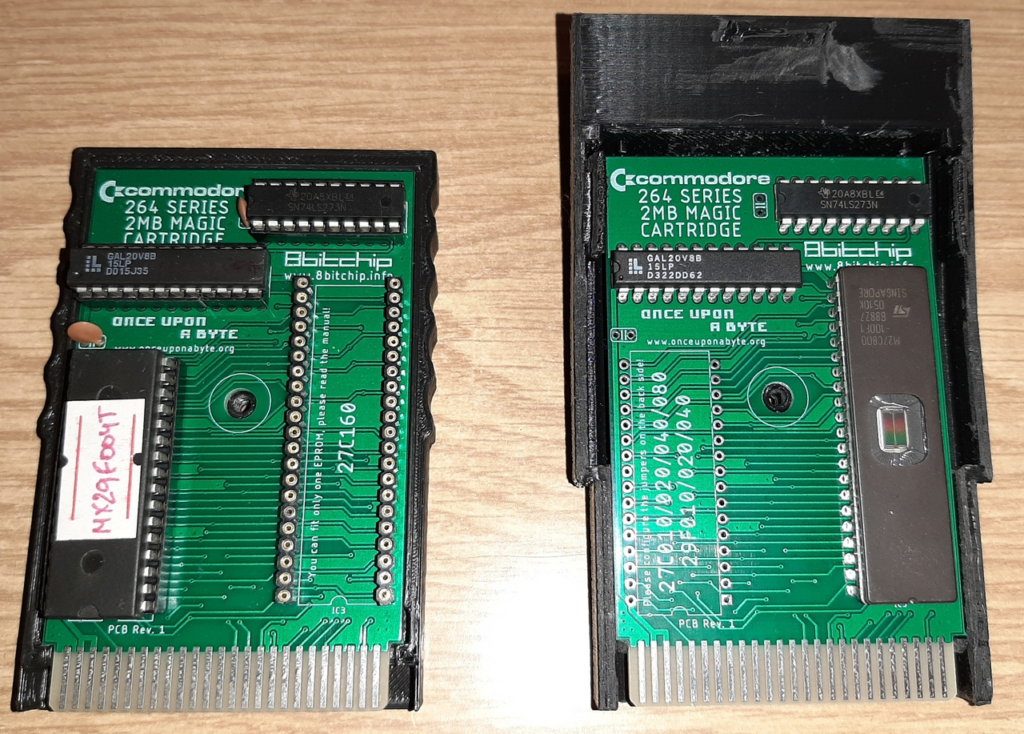
Without a proper adapter, hobbyists and retro gamers are often stuck spending a fortune on one-time programming solution, juggling wires, or… praying to the programmer gods. With this adapter? Suddenly, those boards are easily programmable, reproducible, and actually fun to work with!
So do not take my word for it – just follow the Google search I mentioned earlier, and you will VERY likely find handfuls of similar retro projects you never heard of, or you skipped – get the PCB’s printed, put in some love and spread the word to highlight projects like the Magic Cart to more enthusiasts!
Eladio initially posted a tweet, highlighting the adapter’s usefulness across classics like NES, SNES, and Sega, just to name a few. Honestly that is just a starting point so I do encourage you guys to think wider beyond consoles and into micro computers like the Amiga, multiple Commodore machines, or MSX!
This little PCB is not some obscure lab curiosity, it powers real retro gaming projects. Yeah, often niche projects, but mostly all of them are true hardware solutions rather than emulation and since a lot of us like discovering and sharing gems – go build yourself this adapter!
Testing the TL866A + 27C160 Adapter
So cost reality check? The 27C160 is slowly getting harder to find new, but it’s not impossible. A single unit costs around $9.90 (Futurlec) or €9.25 (Reichelt).
In theory, larger distributors could still source from STMicroelectronics, but probably not in single quantities. It’s not obsolete – just not stocked by default. With some luck, a local electronics supplier might still have a few lying around if you’re fortunate enough to have a mom-and-pop shop nearby.
AliExpress to the rescue!
I don’t always recommend AliExpress for parts, since chips can truly be hit or miss, and testing ASAP is essential to avoid refund headaches. That said, EPROMs – especially STMicroelectronics ones – are extremely sturdy, with the ability to endure massive amounts of erase/write cycles. Even second-hand chips have a high success rate.
Chip variants
So I grabbed a batch of 10 pieces 27C160 EPROMs for just under €10 shipped – a bargain by all counts since that is about 10% the cost of a new chip! My batch included 3 main variants (slight differences in batches aside, as expected when buying second-hand), with production dates all over the place.
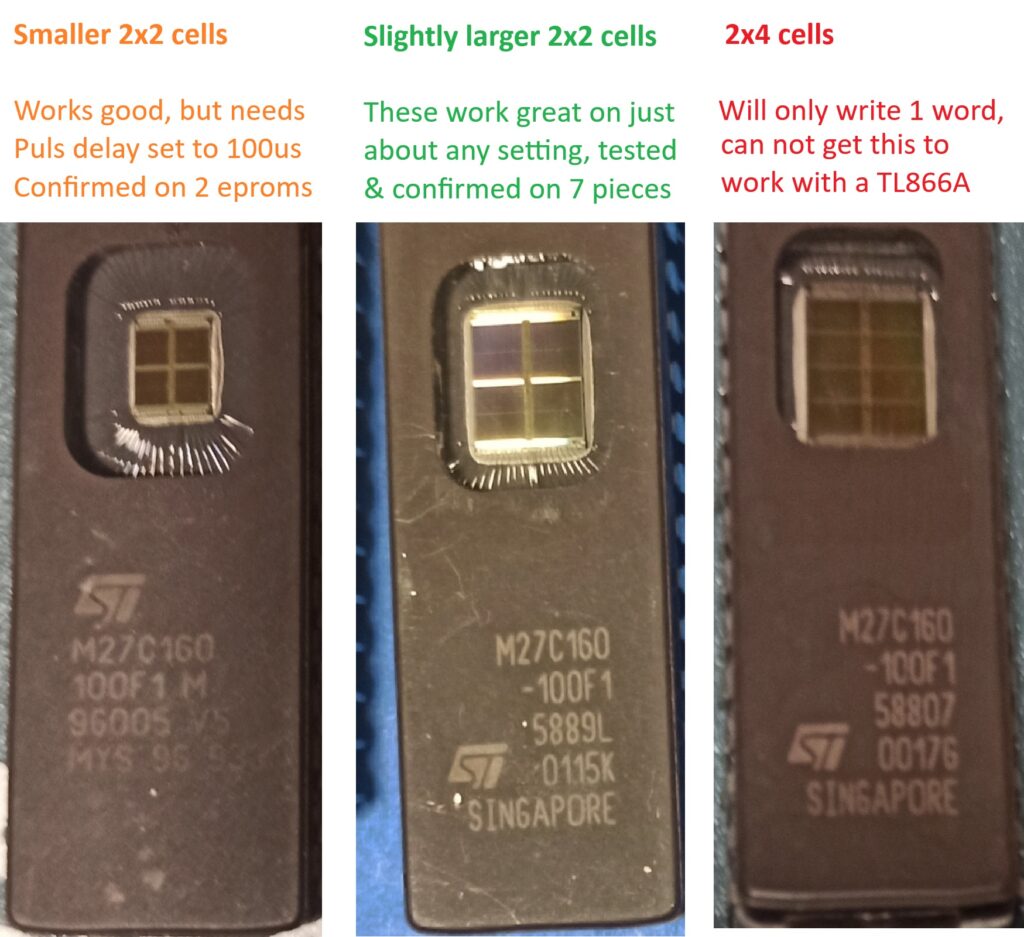
The main difference: the UV window pad configuration. I’ll call them Types A, B, and C:
– Type A: 2×2 pads using only the center of the available window space
– Type B: 2×2 pads using most of the available window space
– Type C: 2×4 pads
Testing Results
Type A: 2/10 chips needed a little TLC – a tiny tweak outside recommended settings (changing 50µs → 100µs) made them programmable and verifiable. Just to be sure, here’s the full settings I used: VPP Voltage: 13.50V / VCC Verify: 5.00V / VDD Write: 5.00V / Puls Delay: 100us. Although I did have success with other voltages too, as long as the Puls Delay was at 100 and not 50us.
Type B: 7/10 chips worked flawlessly – first try, recommended settings from Eladio (50us)
Type C: 1/10 chip failed spectacularly. It reads and erases just fine, and can write a single word. But after the single word right it refuses to write more than that. Likely an older, stricter variant; not broken, just a silicon diva. I tried over and over again with different settings and can simply not get it to write a full batch.
Practical tips
– Always verify after programming.
– Try voltage differences as also mentioned in the adapter’s github.
– And keep of file writes; since you will be using the adapter to write an image split into 4 sections, it is easy to write the wrong file to the wrong bank (oopsie, yes guilty of writing file 3 to bank 3 and 4 myself once). So do verify the EPROM on the destination device!
Conclusion: Why This Tiny Adapter Matters
Whether you’re working on a project like c264-magic-cart, a multi-game SNES cartridge, or a vintage arcade board, this testing shows that cheap pulled 27C160s + a TL866A + this adapter = a perfectly viable workflow.
I guess what I’m really saying is this: you have to ask yourself – do you want a modern, LED-studded replica for convenience, or do you want to enjoy original hardware and cartridges the way they were meant to be used? No judgment here – after all, I’m just an old nostalgic guy 😉
So, what’s my takeaway?
Community ingenuity wins
The TL866A was never designed to handle every 42-pin EPROM under the sun, but a tiny open-source adapter bridges that gap beautifully. It’s proof that hobbyists and repair techs can extend the life of tools long after they’ve left production.
Cheap parts, big fun
With second-hand 27C160s costing a fraction of new chips, you can experiment, repair, or create without breaking the bank. Sure, some chips might be divas, but a little patience and careful programming go a long way. It also helps that retro ICs – unlike capacitors or batteries – were built like absolute tanks.
Retro gaming is not just nostalgia
For many of us, it’s the hands-on hardware that really matters. From consoles to microcomputers, this adapter enables true hardware projects, not just emulation. There’s something genuinely magical about inserting a freshly programmed EPROM into a classic machine and watching it come to life.
Verification is everything.
Yes, it’s a bit tedious – but always verify your writes, double-check your files, and don’t underestimate the quirks of second-hand chips. A little diligence now saves a lot of frustration later. Trust me… you can always curse yourself like I did.
Enjoy the journey
Whether you’re repairing, building, or tinkering, part of the charm of retro hardware is the challenge -coaxing stubborn chips into cooperating, adapting tools to new tasks, and occasionally celebrating small victories when a chip finally programs flawlessly.
So dust off that old programmer, build yourself that adapter, and dive in!
Thank You & Credits
This little rabbit hole would not have existed without a couple of people who very much deserve a proper shout-out – and who have been super kind in answering a few of my questions along the way!
First off, a big thank you to Eladio Martinez (aka mafe72), who published the GitHub project for the 27C160-TL866 adapter.
His adapter is a great example of what open-source hardware should be: clever, well thought out, and shared with the community so others can build upon it. I’d also strongly encourage you to check out his other projects on GitHub, as well as his commercial site mini-mods, for even more retro goodness.
GitHub: https://github.com/mafe72
Website: https://mini-mods.com
X / Twitter: https://x.com/eladio_martinez
Another big thank you goes to Marko Solajic, creator of the c264-magic-cart project. That project was the spark that sent me down this whole path in the first place. It’s a perfect example of a modern, open-source solution that still respects original hardware – and it’s exactly the kind of project that benefits from being able to work with larger EPROMs like the 27C160.
GitHub: https://github.com/msolajic
c264-magic-cart: https://github.com/msolajic/c264-magic-cart
X / Twitter: https://x.com/msolajic
PCBWay projects: https://www.pcbway.com/project/member/?bmbno=1DE407A1-1650-47
Projects like these are the reason retro hardware is still alive and kicking – not because of big companies or shiny reissues, but because of people who care enough to document, share, and build tools that keep original machines running the way they were meant to.
Thank you both for the inspiration, the engineering, and for keeping the retro spirit very much alive!!!